
Weitong Composite Leads with Cutting-Edge Woven Roving Technology
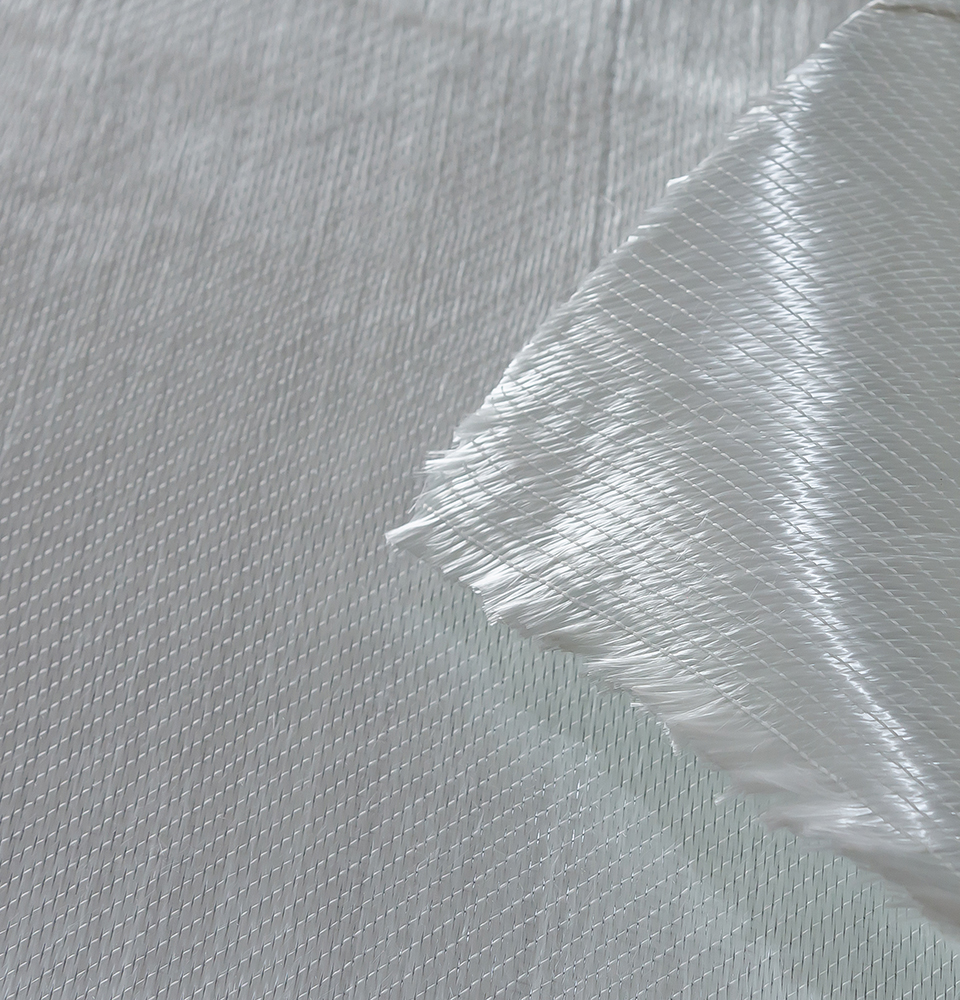
Fiberglass biaxial fabric is a specialized reinforcement material widely used in composite manufacturing. The term “biaxial” refers to the fabric’s dual-direction fiber orientation, typically aligned at 0° and 90°, although ±45° orientations are also common. Unlike unidirectional fabrics, which provide strength along a single axis, or triaxial fabrics, which add a third directional layer, biaxial fabrics deliver balanced mechanical performance along two primary axes.
The fibers are woven or stitched together in a grid-like structure, forming a lightweight but robust sheet. When infused with resin, this material transforms into a composite layer capable of resisting tensile and shear forces along both directions. The biaxial arrangement is critical in applications where multi-directional load-bearing capacity is essential, making it a favorite in industries such as marine, wind energy, automotive, aerospace, and construction reinforcement.
The biaxial structure provides several distinct mechanical advantages over traditional unidirectional or random fiber mats:
• Balanced Tensile Strength: By orienting fibers in two directions, biaxial fabrics distribute stress more evenly. This reduces weak points and increases the overall structural integrity of the composite.
• Improved Shear Resistance: The intersecting fibers resist deformation under twisting or off-axis loads, offering superior dimensional stability.
• Efficient Load Transfer: The resin matrix, combined with biaxial fiber orientation, allows forces to be transferred effectively across the composite layer, minimizing localized stress concentrations.
• Enhanced Impact Resistance: When subjected to impact or bending, biaxial fabrics absorb and distribute energy more efficiently, reducing the likelihood of cracking or delamination.
These advantages make biaxial fiberglass ideal for applications requiring both lightweight construction and high structural performance, such as boat hulls, wind turbine blades, and high-performance automotive panels.
Biaxial fiberglass fabric shines under multi-directional stress conditions. Situations where loads are applied not along a single axis but in multiple directions are where the material proves its value:
• Shear-dominant structures: Components that experience twisting or torsion benefit from the ±45° fiber orientations often found in biaxial fabrics.
• Flexural applications: Bending loads across panels, hulls, or wind turbine blades are better resisted by dual-direction fiber alignment.
• Load-distributed surfaces: Large, flat areas exposed to pressure or tension in multiple axes can reduce overall material use without compromising strength.
By selecting biaxial fabric in these scenarios, engineers can often achieve material efficiency—using fewer layers to reach the desired strength while maintaining weight savings. This balance between performance and cost is a key reason biaxial fabrics are preferred in high-end composite applications.
Despite its advantages, biaxial fiberglass fabric is not always the optimal choice. Potential pitfalls include:
• Unidirectional load requirements: If your component primarily experiences force along one axis, unidirectional fabrics may provide higher strength-to-weight ratios at lower cost.
• Complex multi-layer designs: Some high-performance composites require triaxial or quadraxial fabrics to address loads in three or more directions.
• Cost considerations: Biaxial fabrics are generally more expensive than chopped strand mats or unidirectional fabrics, so using them unnecessarily can inflate project costs.
• Resin compatibility: Not all resins wet out biaxial fabrics equally well; improper selection can lead to voids, poor adhesion, and reduced mechanical performance.
Careful analysis of load conditions, layer orientation, and cost-effectiveness is essential before committing to a biaxial fabric. Consulting with experienced composite engineers can prevent costly mistakes in production and ensure optimal material performance.