Empowering Precision, Defining Efficiency.
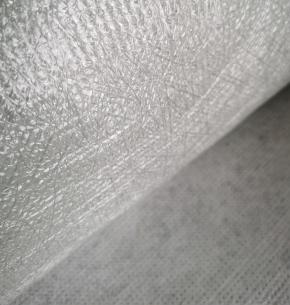
Surface veil stitched combo mat is one layer of surface veil (fiberglass veil or polyester veil) combined with various fiberglass fabrics, multiaxials, and chopped roving layers, by stitching them together. The base material can be only one layer or several layers of different combinations. It can be mainly applied in pultrusion, resin transfer molding, continuous boardmaking, and other forming processes.
1.No chemical adhesive, the felt is soft and easy to set, with less hairiness
2. Effectively improve the appearance of the products and increase the resin content on the surface of the products
3. Solve the problem of easy break and wrinkle when the glass fiber surface mat is formed separately
4. Reduce the laying workload and improve production efficiency
If you have any questions, require additional information, or would like to contact our team, we are here to assist you.
Email: info@wtfiberglass.com
Phone: +86-573-88687898 / +86-18610855617
Address: No.168 Jianye Road, Fengming Street, Tongxiang, Zhejiang, China,314505
Website: https://www.wtfiberglass.com/
Should you have any questions regarding our products, production methods, or market insights, our team is at your service. We look forward to the opportunity to engage with you.
A: In this context, a “surface veil” refers to a very thin, lightweight layer of fine fiberglass fibers placed on the outer surface of a composite laminate. Its main purpose is to improve surface finish, reduce print-through from underlying layers, and prevent fiber protrusion, resulting in a smoother, more cosmetic appearance while still contributing some reinforcement.
A: Combining a veil with a stitched mat creates a surface veil stitched combo mat that offers both structural and cosmetic benefits. The stitched mat provides the main mechanical strength and load-bearing capability, while the surface veil improves laminate smoothness, reduces print-through, and prevents fiber protrusion. This combination ensures the composite has high performance internally and a high-quality finish externally, making it ideal for applications where both strength and appearance matter.
A: Surface veil stitched combo mats are commonly used in applications that require both structural strength and a high-quality surface finish, such as marine composites (boat hulls and decks), automotive panels, wind turbine blades, and construction or architectural laminates. They are particularly favored in situations where smooth, cosmetic surfaces are important while maintaining the mechanical performance of the underlying composite.
A: The veil-to-mat ratio affects the final laminate by balancing surface quality and structural strength. A higher proportion of surface veil improves smoothness, reduces print-through, and enhances cosmetic appearance, but contributes less to overall mechanical strength. Conversely, a higher proportion of stitched mat increases tensile, flexural, and impact performance but may result in a rougher surface finish. Optimizing the ratio ensures the laminate meets both aesthetic and mechanical requirements for its intended application.
A: Surface veil stitched combo mats typically follow standards like ASTM D578 for glass fabrics and ASTM D2344/D7761 for composite strength, ISO 527/10406 for tensile and structural properties, and may also meet ISO 9001 quality management or marine/automotive certifications such as Lloyd’s Register or DNV-GL. These ensure the mats are consistent, strong, and safe for industrial use.