Empowering Precision, Defining Efficiency.
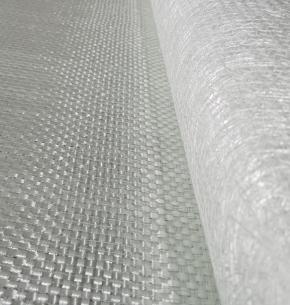
Woven roving combo mat is a layer of woven roving fabric stitched with chopped glass fibers via polyester yarn, without a chemical binder. Mainly used for pultrusion, hand lay-up, and RTM molding process, applied to FRP boat, panel, automobile, cooling tower, and swimming pool, etc.
1. Warp and weft yarn arrayed flat, uniform tension
2. Fiber arrayed in high density, easily deformed, easy to operation
3. Good moldability, fast and completely wet out in resins
If you have any questions, require additional information, or would like to contact our team, we are here to assist you.
Email: info@wtfiberglass.com
Phone: +86-573-88687898 / +86-18610855617
Address: No.168 Jianye Road, Fengming Street, Tongxiang, Zhejiang, China,314505
Website: https://www.wtfiberglass.com/
Should you have any questions regarding our products, production methods, or market insights, our team is at your service. We look forward to the opportunity to engage with you.
A: A combo mat differs from standard woven roving or stitched mats by combining multiple layers with different structures into a single material. Typically, it integrates a woven roving layer for high tensile and flexural strength with a stitched or veil layer to improve surface finish, handleability, and multidirectional reinforcement. This combination allows the mat to provide both mechanical performance and cosmetic quality, which single-layer woven or stitched mats alone cannot achieve.
A: In the woven roving layer of fiberglass combo mats, the most common weaving patterns are plain weave and twill weave. Plain weave interlaces fibers over and under alternately, providing good dimensional stability and even strength, while twill weave creates a diagonal pattern that allows better drape and conformability to complex mold shapes. Both patterns help balance mechanical performance and ease of handling in composite fabrication.
A: Yes, the woven roving layer significantly enhances tensile, flexural, and impact performance of the composite. The continuous, aligned fibers in the woven roving carry loads efficiently along the warp and weft directions, providing high strength and stiffness, while the interlaced structure also helps distribute impact forces, improving the overall durability of the laminate compared to mats without a woven roving layer.
A: Yes, fiberglass woven roving combo mats can be used in hand lay-up, vacuum infusion, and resin transfer molding (RTM) processes. Their layered structure allows good resin wet-out, and the mats can conform to molds of various shapes, making them versatile for different composite manufacturing methods while delivering both mechanical strength and surface quality.
A: Yes, fiberglass woven roving combo mats can be used for both structural and cosmetic laminates. The woven roving layer provides high tensile and flexural strength for structural performance, while additional stitched or veil layers improve surface finish, reduce print-through, and enhance the cosmetic appearance of the laminate. This makes combo mats suitable for applications where both mechanical integrity and visual quality are important.