Empowering Precision, Defining Efficiency.
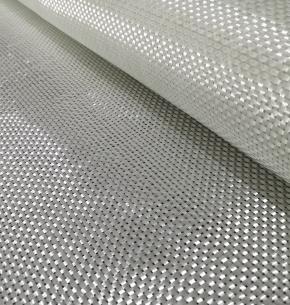
Fiberglass woven roving is made of E-glass direct roving by plain/twill weaving style. Widely applied to FRP boat, surfboard, tank, swimming pool, automobile, sailboard, panel as well as other FRP products.
1. Warp and weft rovings aligned in a parallel and flat manner, resulting in uniform tension
2. Densely aligned fibers, resulting in high dimensional stability and making handling easy
3. Easy shape adaptation and impregnation, fast and complete wet out in resins
4. Excellent mechanical properties
If you have any questions, require additional information, or would like to contact our team, we are here to assist you.
Email: info@wtfiberglass.com
Phone: +86-573-88687898 / +86-18610855617
Address: No.168 Jianye Road, Fengming Street, Tongxiang, Zhejiang, China,314505
Website: https://www.wtfiberglass.com/
Should you have any questions regarding our products, production methods, or market insights, our team is at your service. We look forward to the opportunity to engage with you.
A: Fiberglass woven roving is a single layer of interlaced fibers providing mainly structural strength, while woven roving combo mats combine the woven roving with additional layers like stitched mats or veils, offering both strength and improved surface finish.
A: Woven roving is commonly used in composites because its interlaced fibers provide high tensile and flexural strength, good dimensional stability, and consistent load distribution. Its structure allows easy handling, layering, and resin impregnation, making it ideal for both structural reinforcement and versatile composite fabrication.
A: The advantages of using woven roving include high tensile and flexural strength, good dimensional stability, and efficient load distribution. Its interlaced fiber structure allows easy handling, layering, and resin impregnation, making it suitable for both structural and cosmetic composite applications. Additionally, woven roving can conform to complex shapes and supports consistent, reliable performance in a wide range of industries.
A: Woven roving can conform reasonably well to moderately complex mold shapes, especially when using lighter weights or smaller widths. However, because the fibers are interlaced, it is less flexible than stitched mats or chopped strand mats, and excessive bending can cause wrinkling or gaps. For highly contoured molds, it is often combined with more conformable layers, such as veils or stitched mats, to ensure full coverage and smooth laminates.
A: The limits of woven roving in high-stress applications stem from its fiber crimp and bidirectional load capacity. Because the fibers are interlaced, some load is lost to crimp, reducing maximum tensile and flexural strength compared to unidirectional or multiaxial fabrics. It also mainly provides strength in the warp and weft directions, so off-axis or complex multidirectional stresses can lead to lower performance. For very high-stress or highly directional loads, designers often use multiaxial fabrics or combo mats to supplement or replace woven roving.