Empowering Precision, Defining Efficiency.
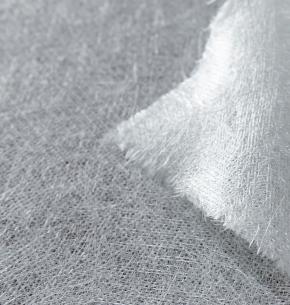
Fiberglass stitched mat is made of chopped fiberglass strands randomly dispersed and laid on the forming belt, stitched together by a polyester yarn. Mainly used for pultrusion, filament winding, hand lay-up, and RTM molding process, applied to FRP pipe and storage tank, etc.
1. Even thickness, high wet tensile strength retention
2. Good moldability, good drapability, and easy operation
3. Excellent rollout characteristics and effective reinforcement
4. Good wet-out in resins and high productivity
If you have any questions, require additional information, or would like to contact our team, we are here to assist you.
Email: info@wtfiberglass.com
Phone: +86-573-88687898 / +86-18610855617
Address: No.168 Jianye Road, Fengming Street, Tongxiang, Zhejiang, China,314505
Website: https://www.wtfiberglass.com/
Should you have any questions regarding our products, production methods, or market insights, our team is at your service. We look forward to the opportunity to engage with you.
A: In fiberglass mats, “stitched” means that layers of continuous or chopped fiberglass fibers are held together by a thread or yarn that is sewn through the mat. This stitching keeps the fibers in place, maintains the mat’s shape, and prevents fiber shifting during handling and resin impregnation, without interlacing the fibers like in woven fabrics.
A: Fiberglass stitched mats are manufactured by first laying continuous or chopped fiberglass fibers in one or more directions to form a loose mat. These layers are then held together by sewing a lightweight thread through the mat, which stabilizes the fibers without weaving them. The process may also include heat setting or light resin binder application to improve handling and prevent fiber displacement during storage and composite fabrication.
A: Fiberglass stitched mats typically use E-glass and S-glass fibers. E-glass (electrical-grade glass) is the most common due to its good strength, chemical resistance, and cost-effectiveness, making it suitable for general composite applications. S-glass (structural-grade glass) offers higher tensile strength and stiffness, making it ideal for demanding structural or high-performance applications, though it is more expensive. Some mats may also combine different types of glass fibers to balance performance and cost.
A: Yes, stitched mats are generally stronger than chopped strand mats because their fibers are more organized and held in place by stitching, which reduces fiber movement and improves load transfer. Chopped strand mats consist of randomly oriented short fibers, which provide isotropic reinforcement but lower tensile and flexural strength compared to the more aligned structure of stitched mats.
A: Fiberglass stitched mats are compatible with a wide range of resin systems, including polyester, vinyl ester, and epoxy resins. They can also work with phenolic and polyurethane resins in specialized applications. The mats’ open structure and stitched fiber arrangement allow easy resin wet-out, making them suitable for hand lay-up, vacuum infusion, resin transfer molding (RTM), and other composite manufacturing processes.